Monday, December 22, 2008
New Blog: Everything Wrong with Everything
I have a new blog I post to erratically, called Everything That's Wrong with Everything. There are two TWE (Things wrong with everything) so far, those being gift cards and P'zones. They're basically humorous anecdotes on really stupid things that have over-reaching ramifications for humanity's survival in the long run. You're welcome.


Saturday, December 20, 2008
Letter to Roger Ebert
I sent a letter to Roger Ebert just now, in an attempt to start a dialogue on games as art. Enjoy:
I have been reading your thoughts on video games as an art medium recently. I want to bring the types of reviews you do to the gaming world, in an attempt to reduce the stigma they carry as childrens' toys, or at least not art. Still, you are convinced that games cannot be, or at least, aren't currently capable of being art.
First of all, Clive Barker's defense was weak. He suffers from a limited vision even within gaming, as he talks about games as though all of their narratives have to always branch, which is mostly a western point of view. Japanese games are more often entirely linear in their storylines, so that ruins the scope of many things he said about video games.
Anyway, that was more than a year ago, and I need to construct my own points here, you've already responded to his. You said recently that you thought video games were getting better, but still not capable of art. In my opinion, games actually have a natural advantage over other mediums in the art they can produce, though certainly they haven't produced art to the point of any other so far. Just as film can utilize text, photography, and music, video games can use all of the above including film.
One basic problem with these arguments about gaming as art, I think, is society isn't familiar enough with video games to understand the scope they cover. Some video games are like board games, while some are like books, and others almost nothing but music and visuals. Other video games are just "games" that don't try to pursue any narrative. In the film medium, the boundaries here are clearly understood, as commercials, TV shows, narrative feature films, and animated shorts are all basically considered different things. People don't immediately realize this distinction in games right now, because game magazines and award shows all cover all kinds of video games, from Cooking Mama and Bejeweled to Metal Gear Solid and Valkyria Chronicles. Distinctions in coverage tend to follow which console a game is on rather than any sort of genre or technique, which is rather arbitrary in one sense, but only meaningful from the consumer end.
I really think game criticism has to advance for games to at this point as well. The game companies won't care about writing and art design until somebody does. All gaming journalism is stuck in the "enthusiast" mode right now, and most reviews focus on gameplay and technical details over writing and art design. As long as Battlefield: Bad Company sells well and gets an 85 on Metacritic with such completely awful writing, why should companies hire better writers? The average age of gamers (at this point around 33) also needs to move up, which should happen if games can start to be considered a serious art medium.
Another quick point: Games also have the potential power of procedural rhetoric, which as far as I know was an idea first put into writing by Georgia Tech's Ian Bogost. Rather than arguing points with words, games can argue with numbers, basically, representing a real world system in an interactive way so people learn something. SimCity is a well-known example, though the recent editions of that series have abandoned all sense, resorting to a "have fun creating a city that looks cool" objective instead of showing people how a city must be run.
Okay, well, there's an awful lot to talk about on the topic, and I would be honored if you would reply to these considerations as jumbled and unedited they are. Thanks for reading.
Nathaniel Edwards
http://www.legalarcade.com
Location: Travelers Rest, SC
I have been reading your thoughts on video games as an art medium recently. I want to bring the types of reviews you do to the gaming world, in an attempt to reduce the stigma they carry as childrens' toys, or at least not art. Still, you are convinced that games cannot be, or at least, aren't currently capable of being art.
First of all, Clive Barker's defense was weak. He suffers from a limited vision even within gaming, as he talks about games as though all of their narratives have to always branch, which is mostly a western point of view. Japanese games are more often entirely linear in their storylines, so that ruins the scope of many things he said about video games.
Anyway, that was more than a year ago, and I need to construct my own points here, you've already responded to his. You said recently that you thought video games were getting better, but still not capable of art. In my opinion, games actually have a natural advantage over other mediums in the art they can produce, though certainly they haven't produced art to the point of any other so far. Just as film can utilize text, photography, and music, video games can use all of the above including film.
One basic problem with these arguments about gaming as art, I think, is society isn't familiar enough with video games to understand the scope they cover. Some video games are like board games, while some are like books, and others almost nothing but music and visuals. Other video games are just "games" that don't try to pursue any narrative. In the film medium, the boundaries here are clearly understood, as commercials, TV shows, narrative feature films, and animated shorts are all basically considered different things. People don't immediately realize this distinction in games right now, because game magazines and award shows all cover all kinds of video games, from Cooking Mama and Bejeweled to Metal Gear Solid and Valkyria Chronicles. Distinctions in coverage tend to follow which console a game is on rather than any sort of genre or technique, which is rather arbitrary in one sense, but only meaningful from the consumer end.
I really think game criticism has to advance for games to at this point as well. The game companies won't care about writing and art design until somebody does. All gaming journalism is stuck in the "enthusiast" mode right now, and most reviews focus on gameplay and technical details over writing and art design. As long as Battlefield: Bad Company sells well and gets an 85 on Metacritic with such completely awful writing, why should companies hire better writers? The average age of gamers (at this point around 33) also needs to move up, which should happen if games can start to be considered a serious art medium.
Another quick point: Games also have the potential power of procedural rhetoric, which as far as I know was an idea first put into writing by Georgia Tech's Ian Bogost. Rather than arguing points with words, games can argue with numbers, basically, representing a real world system in an interactive way so people learn something. SimCity is a well-known example, though the recent editions of that series have abandoned all sense, resorting to a "have fun creating a city that looks cool" objective instead of showing people how a city must be run.
Okay, well, there's an awful lot to talk about on the topic, and I would be honored if you would reply to these considerations as jumbled and unedited they are. Thanks for reading.
Nathaniel Edwards
http://www.legalarcade.com
Location: Travelers Rest, SC
Call of Duty Multiplayer Game Ideas
Spliced from my own split-screen play with others, here is a list of potential ideas for makeshift Call of Duty: World at War (or technically COD4) multiplayer games.
- Suicide Bomber - Despite its controversial name, this doesn't have a lot to do with suicide bombing exactly. The rules are: no shooting, no secondary grenades, no knifing, and you can't let go of any frag grenades you pull out. The entire point is to kill your opponents by pulling out a grenade and being near them when it explodes. This leads to several interesting situations, as an attacked player is safe as long as they don't pull out a grenade, because they can sprint. If they pull out their grenade second, however, it becomes almost impossible for them to get away.
- Sniper Duel - Fairly straightforward, not an incredibly creative idea. Just only use sniper rifles with no frag grenades or pistols allowed.
- Group Hug - Nobody do any killing at all. Why don't we just put the guns away and give peace a chance? Rated T for Teen for mild lyrics. First one to kill anybody gets several damning books and blog posts written about them by all the other players as they get slaughtered over and over.
Friday, December 19, 2008
Into Twitter I Go
Okay, I've hopped on the bandwagon of Twitter. (Just to be clear, I knew about it before you, I was just too... uh... cool to use it). That page will show where I'm being published when, along with some extra thoughts when I feel like it.
Sunday, December 14, 2008
Play This Thing.com
PlayThisThing.com gave me a good link to my recent Oiligarchy review, so I'd like to return the favor here. They have a fairly brilliant site for anyone looking for artistic, well-done flash games and tabletop RPGs. Their reviews are terrific and there is no better place for bored browsing for some amazingly good freeware and shareware games. They recently inspired me to revisit text adventures after I played Lost Pig and Place Under Ground. Anyway, visit that site for a constant stream of brilliant games and genuinely helpful reviews.
Tuesday, December 9, 2008
Controversial Classics: Shin Megami Tensei: Persona 3
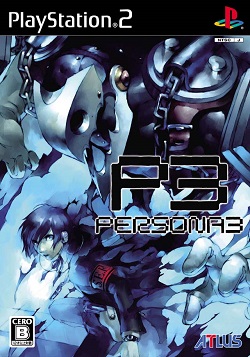
Well, the big release season is basically over this year. Sure, there's still Prince of Persia, but that's about it until 2009, and I don't think it's going to garner a whole lot of controversy just because it says "fer-tile" a lot. That's why I'm going to look at some older games that may have been overlooked by the media watchdogs in the past. These are some sleeper controversies, starting with Shin Megami Tensei: Persona 3.
So, it's a JRPG. There are also some little Japanese dating game elements, but nothing nearly as naughty as some awful ones that are out there. That's not the problem. The problem is, the protagonists are, at first blush, teens who gain powers when they shoot themselves in the head. Yeah. Let that sink in before I explain why that's, of course, not at all reasonable for me to say. Go ahead. I'll wait. Write a letter to your congressman demanding that it be banned. Say that it gives you points for committing suicide, and they'll jump on it. Do it.
The thing is, the "gun" they shoot themselves with is an "evoker". There are other, real guns inside the game as well, so the characters aren't actually shooting themselves, it just really looks like it. This GameTrailers video should show you what's going on at about 0:22. So yeah, it's kind of a bust. Of course, these "facts" here don't stop our politicians from saying that Grand Theft Auto gives you points for killing hookers and raping people, so I think this could really make it into the spotlight. That is, if it weren't more than a year old and not at all mainstream.
EDIT: Oh, and Persona 4 is out now. I can't believe I didn't realize that before I wrote this.
Thursday, December 4, 2008
Oiligarchy: My Favorite Serious Game

I am in love with Oiligarchy, Molleindustria's latest "serious game" that puts the player in the role of an oil tycoon who, if successful, will somewhat indirectly destroy the world. Molleindustria's most famous game before this was the McDonald's Game which I thought was informative, but didn't function quite as well on the game side of things. I consider Oiligarchy to be the best mix of education and game I have ever seen, with many points to be learned and/or earned (a bit cheesy, I know).
So, you're an oil tycoon. At the start of the game in 1946 (each turn is a year) you have available to you a small strip of Texas, where you can search and mine for oil to your heart's content, no regulation. It's not too difficult to start turning a profit, but the world quickly starts to want more and more oil, forcing you to find new areas of the world to drill, baby, drill. Each other area in the game (Alaska, Nigeria, Venezuela, and Iraq) has its own problems that discourage drilling. To overcome most of those issues, you need to control the United States government.
Elections happen at the end of every decade. You are given a quick mini-game of sorts in which the "Donkey Party" races the "Elephant Party" to the presidency, with their popular support at the times and your money donations determining who will win. The parties have no actual difference inside the game, so you quickly figure out that party loyalty will get you absolutely nowhere. In fact, for real control and keeping down the growing environmentalist movement, you have to keep donating to the loser to some extent as well. Anyway, enough money for the winning party, and you'll receive access to the "secret room" below the Capitol Building that will allow you to pass special measures to help your own profits, like a whole event chain leading to the Gulf Wars.
A successful gamer will follow history exactly up to the present day. After that, oil peaks as supplies suddenly begin to dry up, and the game becomes much more satirical. Humongous catastrophes begin to strike the economy and the people start to reform absolutely everything in their lives in an attempt to get by, but if you successfully kept them hooked on oil and kept the government in your hands, then the game will (SPOILER ALERT) end with the Mutually Assured Destruction of the Earth over your oil. Other endings are possible if the gamer takes different approaches, but according to the victory matrix the game sets out, if you win, the world ends.
The game is very fun to play overall, even though it's (perhaps realistically) stupid-easy to turn a profit. Keeping the government in your control is a bit more difficult, especially as popular opinion becomes more and more skewed towards environmentalism, eventually leading them to vote out the incumbent party by huge margins over and over as they realize whichever president they elected was just as oiled as the last guy. Anyway, it's a brilliant game, and I would definitely recommend it to anyone. Experience it yourself.
Subscribe to:
Posts (Atom)